Accounting: Complete Guide for Businesses and ERP Systems
Accounting is the foundation of financial control, compliance, and decision-making in every organization. This guide explains accounting from basic concepts to enterprise-level ERP practices.
What Is Accounting?
Accounting is the systematic process of recording, classifying, summarizing, analyzing, and reporting financial transactions of a business. Every sale, purchase, payment, or receipt creates financial data that must be recorded accurately.
The goal of accounting is to convert daily financial activities into meaningful information that helps management, owners, investors, and regulators understand financial performance.
Why Accounting Is Important

Accounting brings discipline, accuracy, and transparency to business finances. Without accounting, organizations cannot measure profitability or maintain compliance.
- Measures profit and loss accurately
- Ensures tax and regulatory compliance
- Improves cash flow management
- Supports budgeting and forecasting
- Builds trust with banks and investors
Objectives of Accounting
Permanent Record of Transactions
Accounting maintains a permanent and verifiable record of financial transactions, essential for audits and regulatory compliance.
Determination of Profit or Loss
Profit and loss statements show whether the business is generating profit or incurring losses.
Determining Financial Position
Balance sheets display assets, liabilities, and capital, reflecting overall financial strength.
Accounting vs Bookkeeping
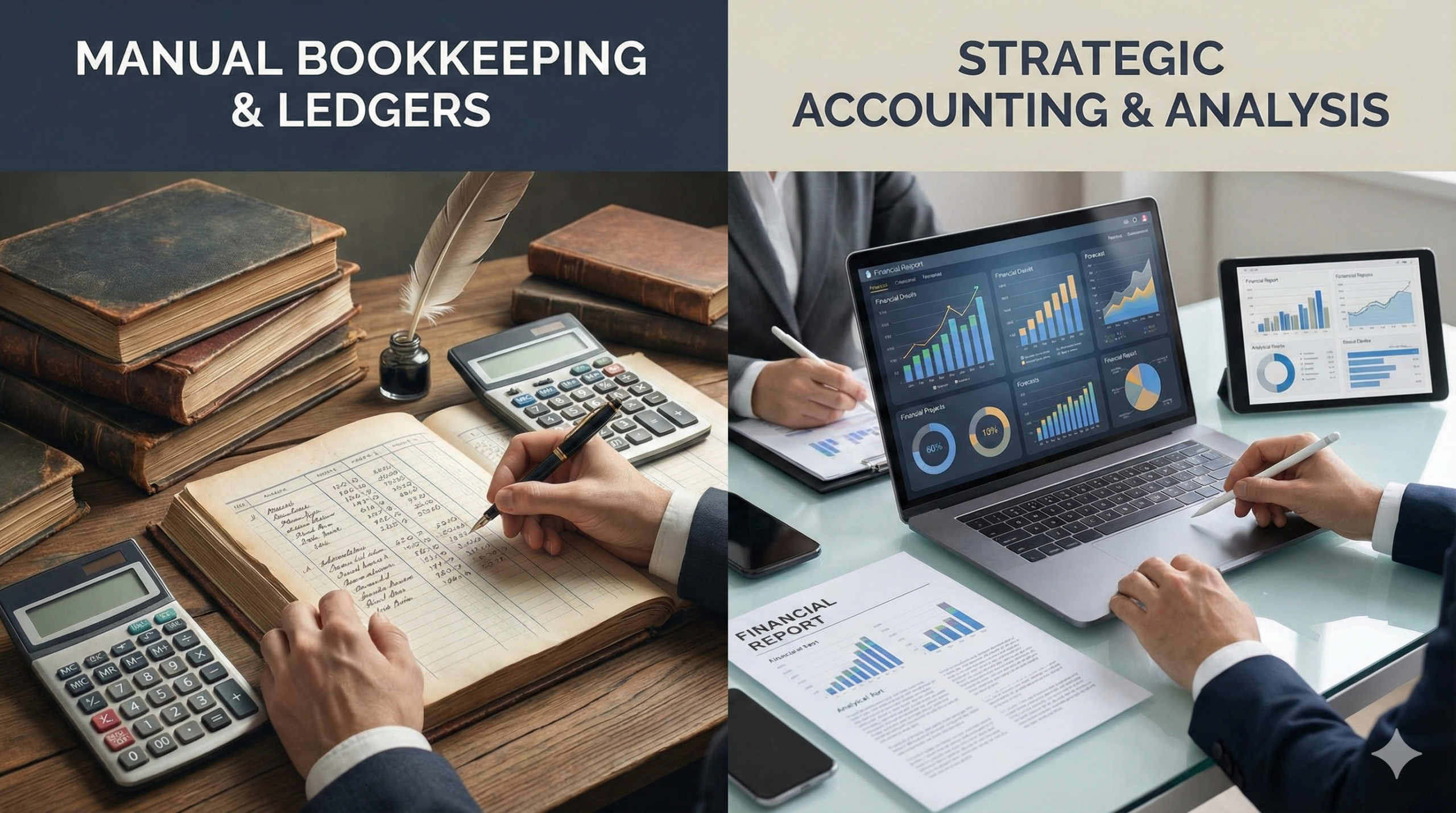
Bookkeeping records transactions, while accounting analyzes and interprets financial data. Bookkeeping is operational; accounting is strategic.
Basic Accounting Terminology
- Assets: Resources owned by a business such as cash, inventory, and machinery
- Liabilities: Obligations including loans, creditors, and taxes payable
- Capital: Owner’s investment and retained earnings
- Revenue: Income earned from business operations
- Expenses: Costs incurred to generate revenue
Double Entry System of Accounting
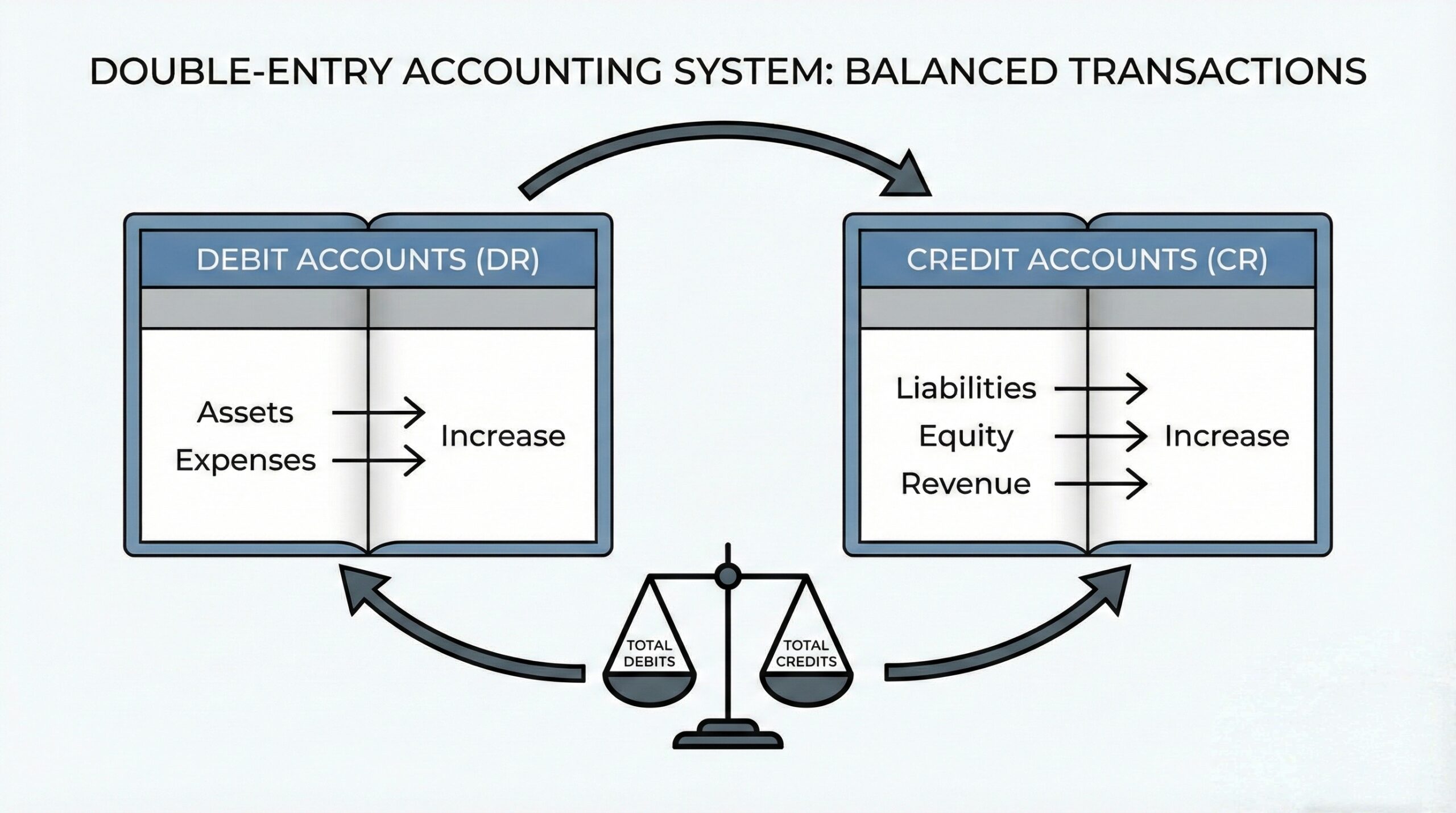
Accounting follows the double-entry system, where every transaction affects at least two accounts. This ensures accuracy, balance, and internal financial control.
The Accounting Cycle
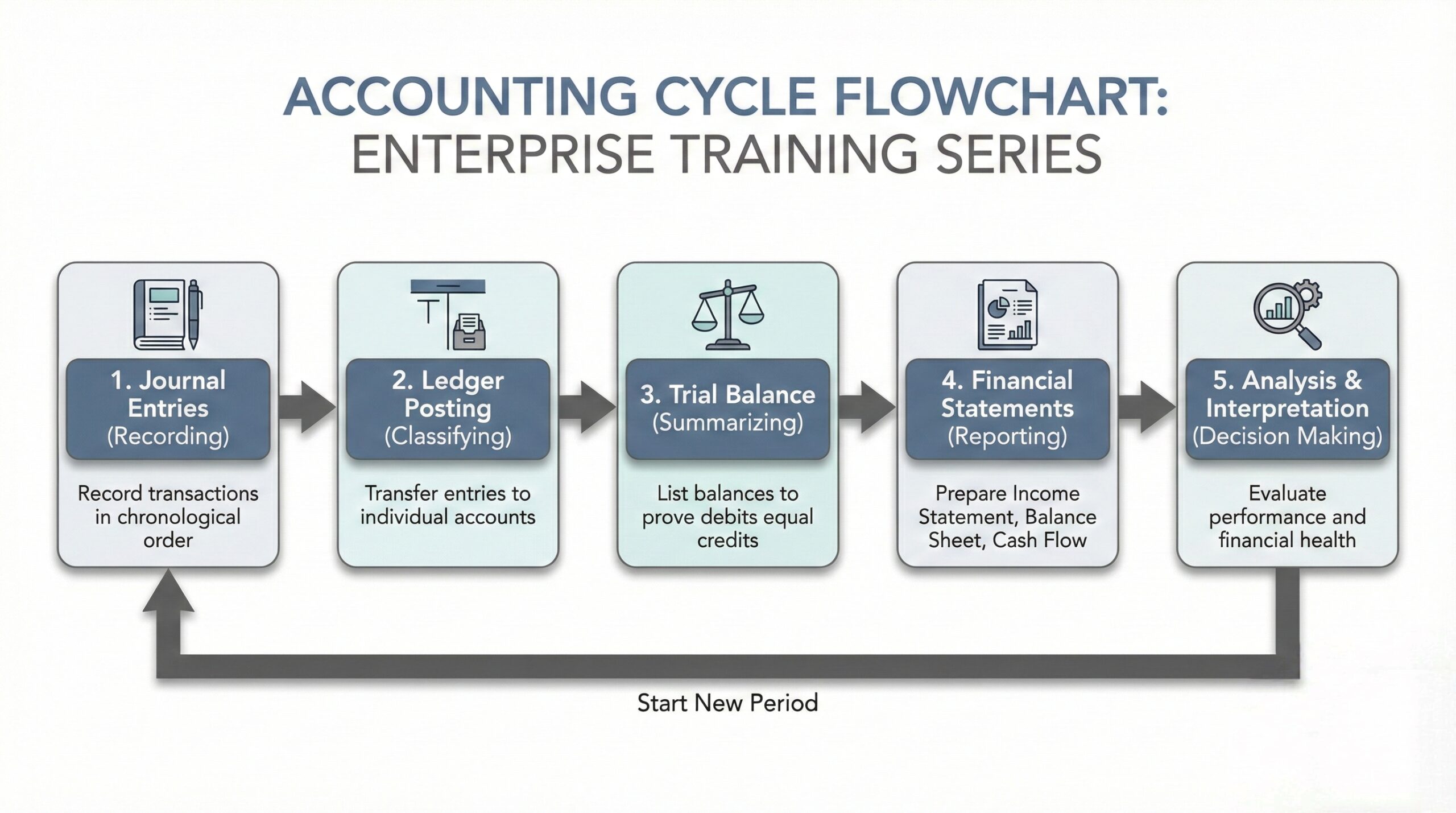
- Identify financial transactions
- Record transactions in journals
- Post transactions to ledger accounts
- Prepare trial balance
- Create financial statements
- Analyze and interpret results
Financial Statements
Profit and Loss Statement
Shows income, expenses, and net profit or loss for a specific period.
Balance Sheet
Displays assets, liabilities, and capital using the equation Assets = Liabilities + Capital.
Cash Flow Statement
Tracks actual cash inflows and outflows to ensure liquidity.
Types of Accounting
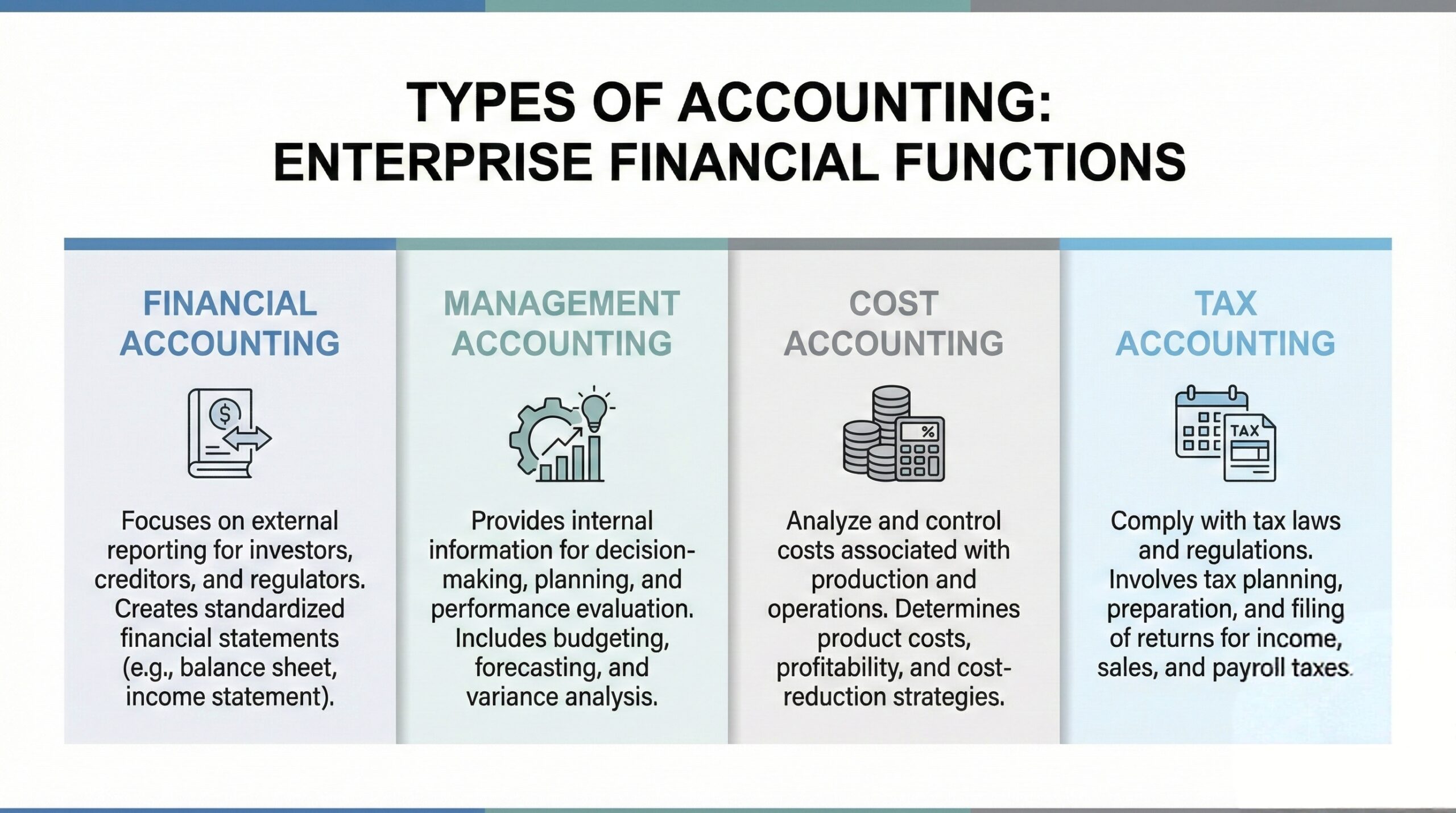
- Financial Accounting: External reporting and statutory compliance
- Management Accounting: Internal planning and performance control
- Cost Accounting: Manufacturing and production cost analysis
- Tax Accounting: GST and income tax compliance
Accounting Software and ERP Systems
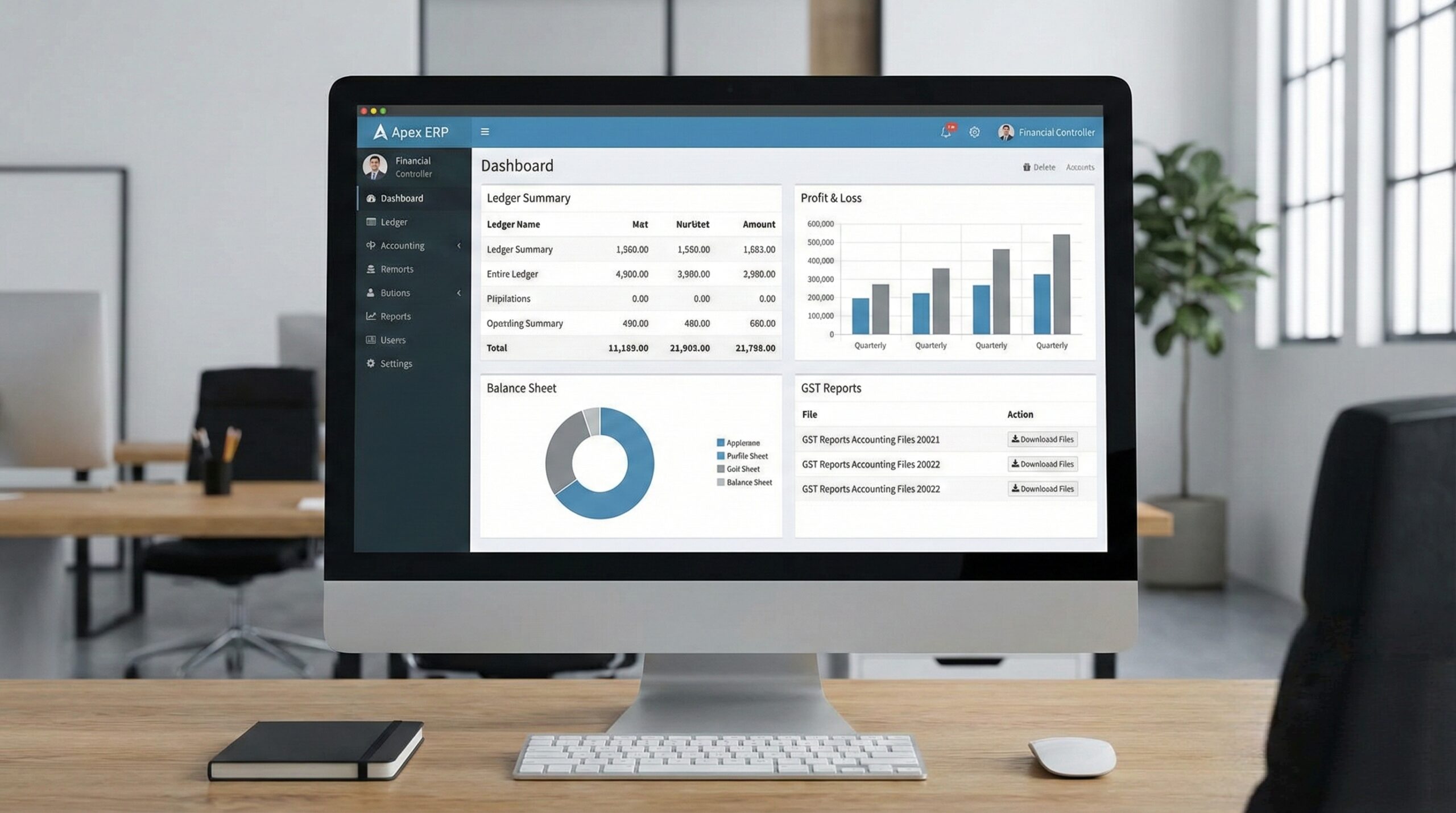
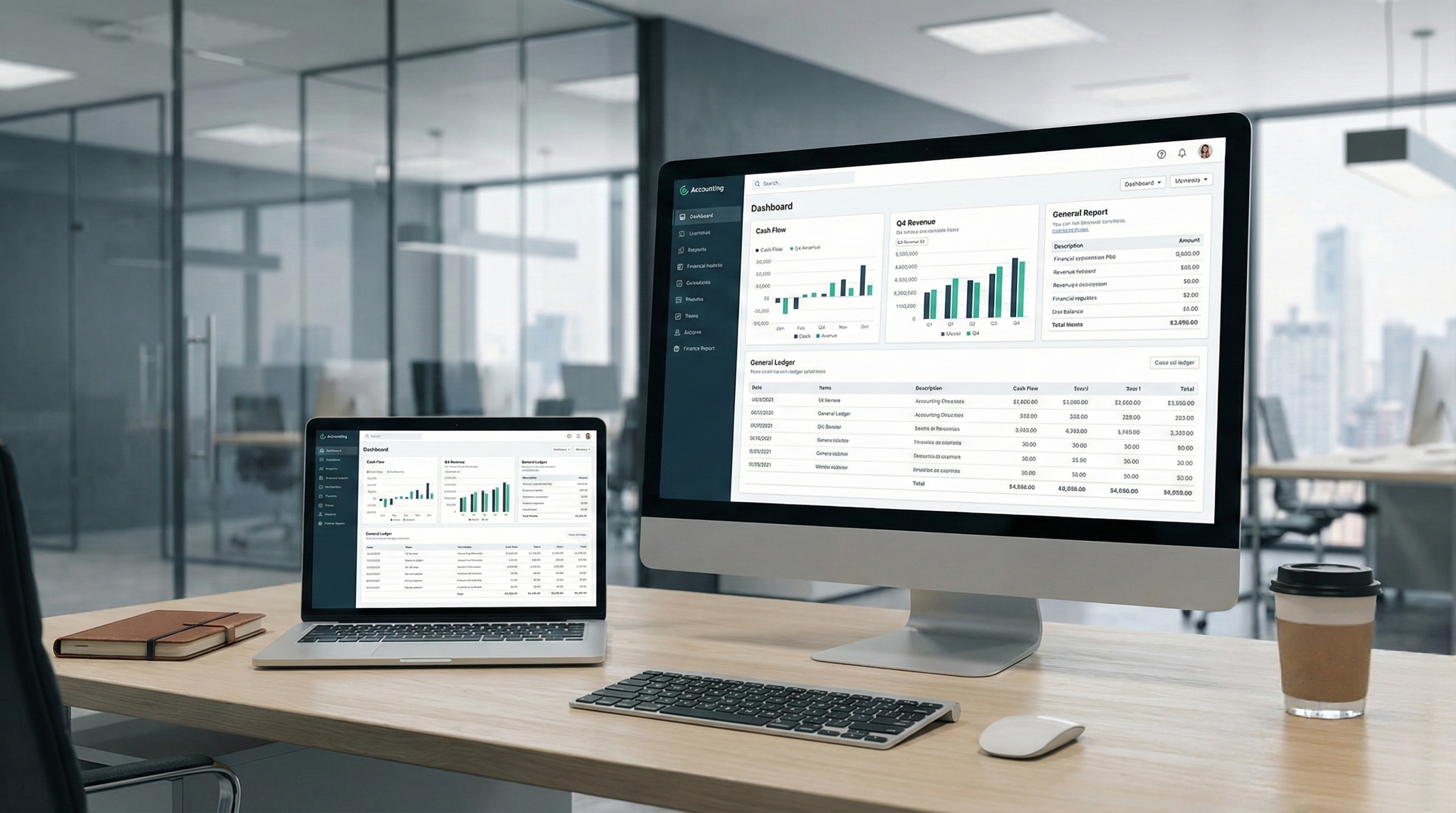
ERP-based accounting systems automate financial processes, integrate departments, and provide real-time financial visibility across the organization.
Best Practices in Accounting
- Automate accounting processes
- Perform regular reconciliations
- Maintain proper documentation
- Use role-based access control
- Ensure audit-ready reporting
Conclusion
Accounting is the backbone of every successful business. When supported by modern ERP systems such as Solution ERP (Vyom ERP), accounting ensures accuracy, compliance, control, and long-term business stability.